

SHIPPING CONTAINER MOVERS IN AUSTIN TEXAS
Ground-Level Delivery
20+ Years Experience
No Crane Required
5.0 Rated Service
Austin container moving: solve the access questions early
A container can fit on a property without the delivery equipment being able to place it there. That distinction matters when an Austin job involves a narrow entrance, an angled driveway, a busy construction site, or a receiving area behind a building. TCT helps review those conditions before transport is arranged. Start with the intended use and position, then show the route the truck would take to reach it.
The same approach applies to moves connecting Austin with Round Rock, Cedar Park, Leander, Pflugerville, Buda, or Kyle. Each endpoint needs an assessment. A straightforward collection from a seller does not guarantee a straightforward delivery to the property. Exact addresses, current photos, container dimensions, and a clear description of the contents provide the foundation for a workable quote.

Three common Austin container projects
Bringing a purchased container to your property
Before buying, consider how the container will be delivered and where its doors should face. Ask the seller for the actual unit's size, height, condition, and collection arrangements. Then send TCT photos of the receiving entrance and placement area. Reviewing transport before committing to a difficult location can help you understand what preparation is needed and whether the intended position is practical.
Moving storage between construction sites
A contractor's container may need to move while both projects remain active. Confirm who will release the unit and who can authorize its position at the next site. Describe any tools or materials inside and provide weight information. Keep the loading and unloading lanes clear of trades, vehicles, and stored materials during the operation. A shared plan helps the move fit into the workday.
Reworking a container's position on the same property
If the doors face the wrong way or the unit blocks a future work area, explain the desired result. Send a sketch with the current and proposed positions. TCT needs to see the handling path as well as the destination. Rotating or shifting a container may still require loading it, and the equipment needs enough room to carry out that process.
Entrances, slopes, and the final approach
Photograph the entrance from both directions along the public road, then show the route into the property. Include gate posts, tight bends, overhead branches, cables, walls, and changes in grade. A wide gate may still be difficult to use if the turn into it is sharp. Measurements are useful, but they should accompany photos that show the geometry of the approach.
For a sloped driveway or uneven receiving area, make the elevation change visible in the pictures. Tell TCT about abrupt transitions between the road and drive, and about soft edges or surfaces that may not support the intended equipment. Do not assume a delivery route is suitable because a pickup truck uses it. The container transport vehicle has different dimensions and operating needs.
If the property is on a private road, identify the correct entrance and any restrictions or physical limitations known to the property manager. Explain how the truck will exit after unloading. Avoid a plan that depends on an unassessed turnaround or a neighbor's property being available. Those arrangements should be resolved before the transport date rather than improvised at arrival.
Selecting the container size with delivery in mind
TCT reviews 10-foot, 20-foot, 40-foot, and 45-foot containers for transport, subject to condition, weight, equipment, and access. A shorter unit can change the placement options, but the truck still needs working space. Before selecting a size for a constrained Austin property, send the site details for review. Container footprint and delivery clearance are separate measurements.
Include the container height and identify high-cube or modified units. Additions such as exterior stairs, air-conditioning equipment, awnings, or projecting fittings should be described and photographed. If a modification will be removed before transport, specify that in the request and confirm the final dimensions. The equipment plan should reflect what will actually be collected.
For a container intended for a future conversion, arrange transport around its present condition and dimensions. Explain anything already installed inside or outside. TCT's transport review does not establish that a proposed building use or placement is approved; the property owner should resolve the intended use and location with the relevant property contacts before delivery is scheduled.
Loaded containers and cargo preparation
If the unit contains tools, business inventory, household goods, or machinery, provide a cargo description and reliable weight information. Mention heavy concentrations at one end and anything that cannot tolerate tilting or vibration. An empty-container quote should not be used for a loaded unit without an updated assessment. The cargo and its distribution can change the handling plan.
Loose materials need attention before travel. Tell TCT how the contents are secured and whether internal shelving or equipment is fixed in place. Do not assume that closed doors make the load ready to move. The team needs to understand the cargo and proposed handling method before accepting the job, especially when the weight or condition is uncertain.

Inspect the container itself as part of preparation. Share photos of corrosion, damaged corners, modified lower rails, or doors that no longer close correctly. Report any attachments to the ground or neighboring structures. A container used for storage over a long period may have become harder to access than it was when originally delivered.
Ground-level delivery without an improvised placement plan
Ground-level loading and unloading can avoid arranging a separate crane or forklift for suitable jobs. Suitability depends on the unit, cargo, equipment, and site. Ask TCT to explain the proposed handling method if the container or its contents have special requirements. A requirement to remain level needs to be discussed explicitly rather than inferred from the phrase ground-level delivery.
Mark the planned position and door direction before arrival. Consider how far the doors need to swing, where users will stand, and how materials will be carried in and out. Leave room for future retrieval. A container placed tightly against a boundary may be usable for storage but more difficult to collect later if surrounding access disappears.
Prepare a stable receiving area and discuss supports in advance. Report known buried features, drainage concerns, or recently disturbed ground along the vehicle path. If rain or other site work changes the conditions after the initial photos, update TCT before dispatch. The transport appointment should begin with a prepared location and a reachable person who can confirm the instructions.
Coordinating sellers, auctions, and receiving contacts
For a seller or auction collection, supply the release contact, container or lot number, pickup hours, and any deadline. Ask whether loading assistance is provided and whether the unit is accessible at ground level. If the container is blocked by other inventory, the seller should explain how that will be resolved. Share those details before selecting a transport date.
At the destination, arrange for gates to be open and the work area to stay available. If a tenant, contractor, or property manager controls access, include that person in the plan. A delivery can be delayed by a locked gate even when the physical space is adequate. Make sure the receiving contact knows the container's identity, expected placement, and preferred door orientation.
Austin moving costs: compare the whole service
The price depends on the addresses, dimensions, weight, collection arrangements, access, and placement work. A short move through difficult entrances may require more planning than a longer transfer between open yards. TCT needs enough detail to quote the actual operation. Photographs help identify questions early and make it easier to compare estimates based on the same scope.
When reviewing a quote, clarify the loading method, any equipment the seller must supply, the intended unloading position, and how waiting or site changes would be handled. Explain schedule flexibility as well as fixed deadlines. Ask whether the proposed plan depends on clearance work that you must complete. A clear division of responsibilities helps everyone prepare for the same job.
Austin container moving FAQs
Can you deliver through a narrow gate?
Send the clear opening measurement and photos showing the turn into it, the path beyond it, and overhead conditions. TCT must assess the truck and handling method, not only whether the container fits. No universal gate width can establish suitability for every property and equipment configuration.
Will a hillside property work for delivery?
That depends on the actual grade, surface, approach, and unloading position. Provide photos that show the changes in elevation and any tight turns. TCT may need additional information before accepting the move. Do not prepare a final pad on the assumption that the vehicle can reach it without reviewing the approach.
Can you move a container from Austin to Cedar Park or Buda?
Request a quote with both addresses and the unit's details. TCT serves Austin and other Texas communities, including property-to-property moves. Show access at both ends, even if one seems straightforward, and provide the availability of the people responsible for release and receipt.
Can I keep my tools inside during transport?
Loaded moves need review of total weight, cargo distribution, securing arrangements, and the proposed handling method. Tell TCT what is inside before the job is quoted. If the contents or weight change before pickup, update the team so the plan can be reassessed.
What should I photograph before contacting TCT?
Show the container, the street approach, each entrance, the narrowest point, the turning area, and the final position. Include slopes and overhead obstructions. Add both addresses, dimensions, loaded or empty status, and timing. Call or text 512-817-1317 or use the contact form to request an Austin move review.
Austin: coordinate delivery with the actual stage of site construction
For an Austin container arriving before a building project is complete, tell TCT when temporary gates, excavation, scaffolding, or material staging will change. Mark a position that remains usable during the next phase and identify any planned later relocation. A current access review is especially useful when the receiving layout differs from the original construction drawing. Give the site superintendent the same placement instructions as the transport team.
Can the container arrive before driveway work is finished?
Describe the unfinished work and current equipment route. TCT must assess the actual access and receiving surface; a future completion plan cannot establish present delivery suitability.
Explore related container services
Container transport · Property-to-property relocation · On-site container moves
Other service areas near Austin
Cedar Park container moving · Round Rock container moving · Leander container moving
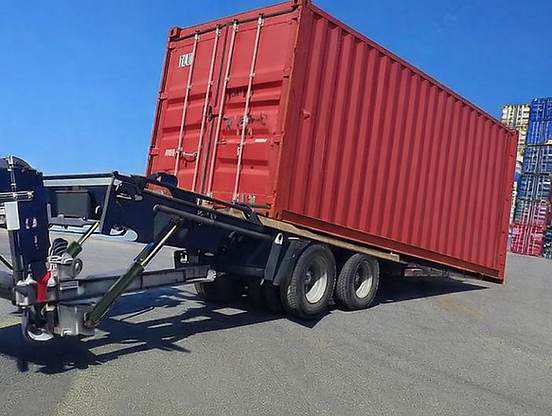
Ground-level container placement in Austin
At Texas Container Transport, our fleet is purpose-built for shipping container transport. We invest in the best equipment so your container arrives safely, every time.
Hydraulic tilt trailers
Ground-level placement
Self-loading trucks
No forklift or crane required
SIMPLE PROCESS
HOW IT WORKS
02
We Schedule & Transport
Fast, reliable delivery on your timeline.
03
We Place Your Container
Exact positioning on-site. Ground-level, no hassle.
